Skin is constantly exposed to environmental factors, daily activities, and clothing choices that can influence its overall appearance and comfort. While sweating is a natural process that helps regulate body temperature, excessive sweat combined with tight-fitting clothing can create conditions that may affect skin health. Many people notice irritation, clogged pores, or breakouts after intense workouts, hot weather, or prolonged periods in restrictive clothing.
Understanding how sweat and tight garments interact with your skin can help you make better lifestyle choices and maintain a healthier skincare routine. Let’s explore the relationship between sweat, clothing, and common skin concerns.
Why Sweat Matters for Skin Health
Sweat is produced by glands located throughout the body. Its primary purpose is to cool the body and maintain a stable internal temperature. Sweat itself is mostly water, but it also contains small amounts of minerals and other substances.
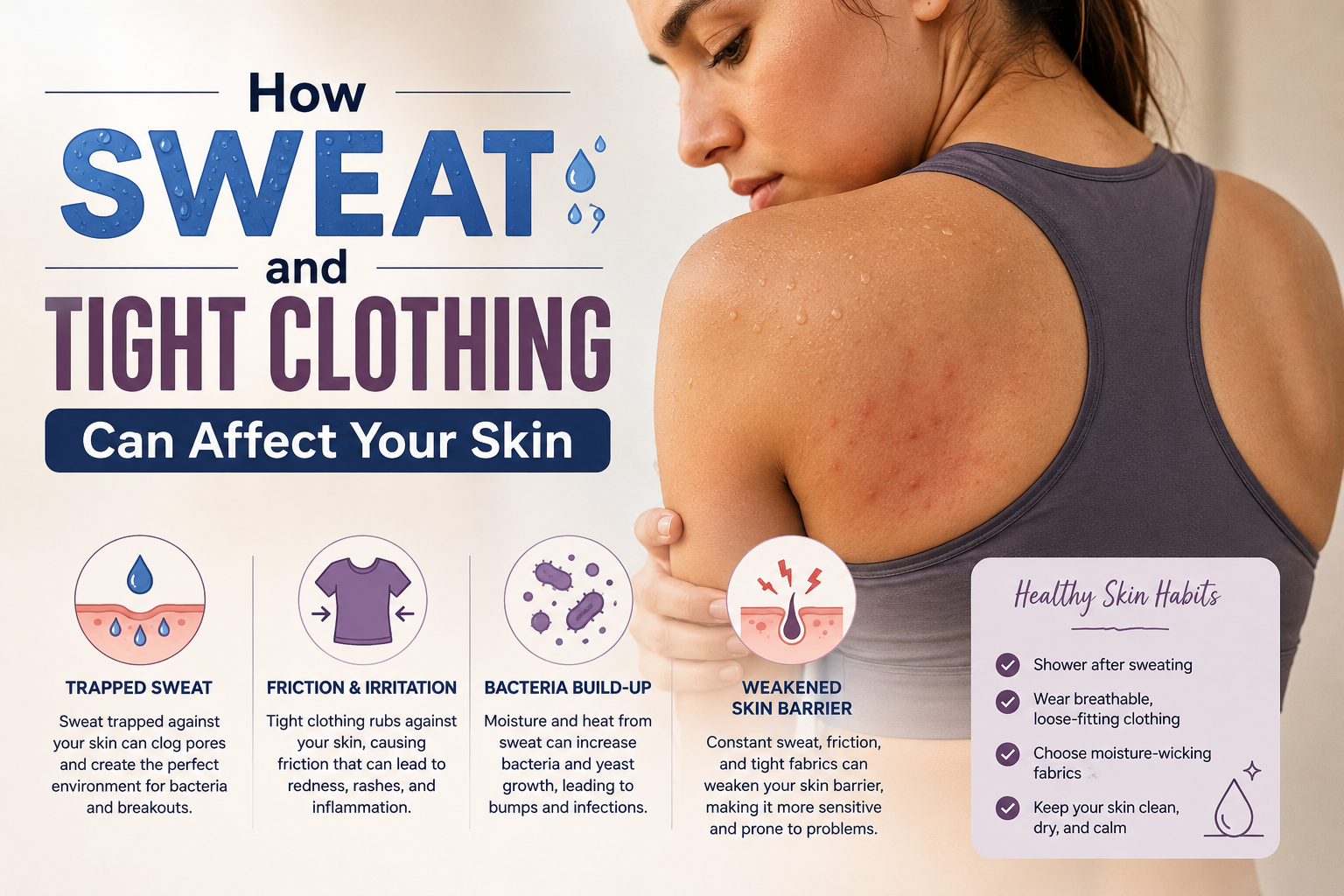
Under normal circumstances, sweating is beneficial. However, problems can arise when sweat remains trapped against the skin for extended periods. When mixed with dirt, oil, dead skin cells, and bacteria, sweat can contribute to clogged pores and irritation.
Areas such as the back, chest, shoulders, and underarms are particularly prone to sweat accumulation because they often remain covered by clothing for long periods.
How Tight Clothing Impacts the Skin
Tight clothing can create friction against the skin throughout the day. This repeated rubbing may irritate the skin barrier, especially when combined with moisture from sweat.
Some common examples include:
- Compression garments worn for extended periods
- Tight athletic wear
- Non-breathable synthetic fabrics
- Tight-fitting shirts and undergarments
- Heavy uniforms worn in hot environments
When clothing traps heat and moisture, it creates an environment where bacteria can thrive more easily. This may increase the likelihood of skin discomfort and blemishes.
The Connection Between Sweat, Friction, and Breakouts
One of the most noticeable effects of sweat and tight clothing is the development of body breakouts. The combination of trapped sweat, excess oil, and friction can contribute to blocked pores.
The process often looks like this:
- Sweat accumulates on the skin.
- Clothing prevents proper evaporation.
- Friction irritates hair follicles.
- Oil, dead skin cells, and debris become trapped.
- Pores become congested, leading to visible blemishes.
Athletes, gym-goers, and individuals living in hot climates may experience these concerns more frequently due to increased perspiration.
Common Skin Issues Linked to Sweat and Tight Clothing
1. Body Acne
Body acne commonly appears on the back, shoulders, chest, and upper arms. Sweat and friction can worsen existing breakouts or contribute to new ones.
Many individuals seek targeted skincare solutions, including an anti acne spray, to support daily body care routines, particularly for hard-to-reach areas that are difficult to cleanse thoroughly.
2. Folliculitis
Folliculitis occurs when hair follicles become irritated or inflamed. It often appears as small red bumps that resemble acne.
Contributing factors may include:
- Excessive sweating
- Tight clothing
- Friction from fabrics
- Poor ventilation around the skin
3. Heat Rash
Heat rash develops when sweat ducts become blocked, preventing sweat from reaching the skin’s surface efficiently.
Symptoms may include:
- Small red bumps
- Itching
- Mild discomfort
- Clusters of tiny blisters
Heat rash is especially common during hot and humid weather conditions.
4. Skin Irritation and Chafing
When skin repeatedly rubs against clothing or other skin surfaces, chafing may occur. Areas such as the inner thighs, underarms, and waistline are particularly susceptible.
The combination of sweat and friction can make irritation more noticeable and uncomfortable.
Fabrics That Can Influence Skin Comfort
Not all fabrics affect the skin in the same way. Certain materials are more breathable and help moisture evaporate efficiently.
Better Choices
- Cotton
- Bamboo fabrics
- Moisture-wicking performance materials
- Lightweight linen
These fabrics generally allow better airflow and reduce prolonged moisture buildup.
Fabrics That May Trap Moisture
- Heavy polyester blends
- Non-breathable synthetic materials
- Thick, tight fabrics worn for extended periods
While many athletic fabrics are designed to manage moisture, overly tight garments can still contribute to friction-related issues.
Tips to Protect Your Skin from Sweat-Related Problems
Shower Soon After Sweating
After exercising or spending time in hot weather, showering can help remove sweat, oil, and debris before they accumulate on the skin.
Use a gentle cleanser that effectively removes impurities without overly drying the skin.
Change Out of Damp Clothing
Remaining in sweaty clothes for extended periods increases skin exposure to moisture and friction.
Changing into clean, dry clothing as soon as possible may help support skin comfort.
Choose Breathable Clothing
Opt for clothing that promotes airflow and allows sweat to evaporate naturally.
Looser-fitting garments can often reduce friction while improving overall comfort.
Wash Workout Gear Regularly
Activewear can collect sweat, oils, and bacteria over time. Washing clothing after use helps maintain cleanliness and reduces the buildup of substances that may irritate the skin.
Maintain a Consistent Body Care Routine
Consistency plays an important role in managing skin health. Cleansing regularly and paying attention to commonly affected areas such as the back and shoulders can be beneficial.
Individuals dealing with recurring body blemishes often incorporate a back acne spray into their routine because it allows convenient application across larger areas of the body.
Lifestyle Habits That Support Clearer-Looking Skin
Small daily habits can make a noticeable difference over time.
Consider the following practices:
- Stay hydrated throughout the day
- Wear weather-appropriate clothing
- Avoid unnecessarily tight garments
- Wash bedding regularly
- Keep gym equipment clean before use
- Avoid sitting in damp clothes after workouts
- Maintain a balanced skincare routine
These habits can help reduce the accumulation of sweat and impurities that may affect the skin’s appearance.
When to Seek Professional Advice
Occasional breakouts or irritation are common, especially during warmer months or periods of increased physical activity. However, persistent symptoms may benefit from professional evaluation.
Consider consulting a skincare professional if you experience:
- Frequent recurring breakouts
- Severe irritation
- Persistent redness
- Painful skin lesions
- Symptoms that do not improve with routine care
Professional guidance can help identify underlying factors and recommend appropriate treatment options.
Conclusion
Sweat is a natural and essential bodily function, but when combined with tight clothing, friction, and trapped moisture, it can contribute to various skin concerns, including body acne, irritation, and heat-related issues. Choosing breathable fabrics, changing out of sweaty clothes promptly, and maintaining a consistent skincare routine can help support healthier-looking skin. For individuals looking to enhance their body care regimen, products such as an anti acne spray or a back acne spray may complement daily skincare efforts. Brands like LabTheory continue to develop practical solutions designed to fit modern skincare routines and support overall skin wellness.