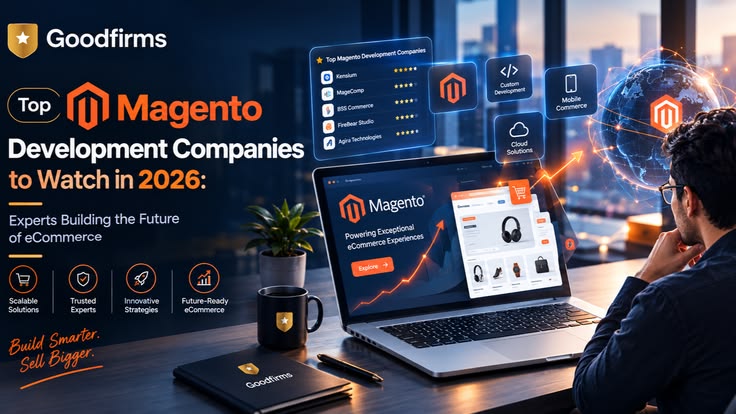
Magento continues to be a strong choice for businesses that need flexible and scalable eCommerce platforms. As online stores become more complex, businesses are looking beyond basic website development. They need better performance, personalized shopping experiences, secure payments, seamless integrations, and infrastructure that can support growth.
This is where experienced Magento development companies can make a difference. The right development partner can help businesses build a store that is easier to manage, faster for customers, and ready to scale.
In 2026, the Magento development landscape is also being shaped by AI, headless commerce, automation, composable architecture, and better customer experiences. With so many agencies offering similar services, knowing what sets the stronger providers apart is important.
Here are some key factors to consider when evaluating Magento development companies to watch in 2026.
What Makes a Magento Development Company Stand Out in 2026?
Not every Magento agency offers the same level of expertise. Businesses should look beyond portfolio size and consider how well a company understands the technical and commercial side of eCommerce.
Magento and Adobe Commerce Expertise
A strong development partner should have practical experience with Magento and Adobe Commerce. Look for expertise in store development, custom modules, integrations, migrations, upgrades, and performance optimization.
Experience matters even more when a project involves an existing Magento store with complex customizations.
Custom Development Capabilities
Most growing businesses eventually need functionality beyond Magento’s standard features.
A capable team should be able to create custom modules and integrations based on specific business requirements. This could include ERP integration, CRM connectivity, payment systems, inventory management, or marketplace integrations.
Performance and Scalability
A visually impressive store is not enough. Performance directly affects the shopping experience.
Magento development companies should understand caching, database optimization, image optimization, server configuration, Core Web Vitals, and scalable infrastructure.
The goal is to create a store that performs well during normal traffic and remains reliable when traffic increases.
Security and Maintenance
Security should be considered throughout the development lifecycle.
Businesses should evaluate whether a Magento partner provides security updates, monitoring, backups, bug fixes, and ongoing maintenance. This becomes particularly important for stores handling customer accounts and payment-related information.
Experience With Modern eCommerce Technologies
The best Magento teams are not limited to traditional development.
AI-powered personalization, headless commerce, cloud infrastructure, automation, advanced analytics, and omnichannel experiences are becoming increasingly relevant.
A development partner that understands these technologies can help businesses prepare for future requirements instead of simply solving today’s problems.
Magento Development Trends Shaping eCommerce in 2026
The eCommerce experience is changing quickly, and Magento development is evolving with it.
AI-Powered Shopping Experiences
AI is becoming increasingly useful across eCommerce. Businesses can use it for product recommendations, customer support, search optimization, merchandising, and personalized experiences.
Magento developers can connect AI-powered tools with existing store infrastructure to make shopping journeys more relevant.
Headless Commerce
Headless architecture separates the frontend experience from the commerce backend.
This gives businesses more flexibility when creating custom storefronts across web, mobile, and other digital channels. It can be particularly useful for brands that want highly customized customer experiences.
Omnichannel Commerce
Customers increasingly move between websites, mobile devices, marketplaces, and social platforms before completing a purchase.
Magento development companies help businesses connect these channels so that product information, inventory, orders, and customer data remain consistent.
Automation
Automation can reduce repetitive work across inventory management, order processing, customer communication, reporting, and marketing.
For growing stores, these improvements can directly impact operational efficiency.
How to Evaluate Magento Development Companies
Choosing a development partner should involve more than comparing hourly rates.
Review Relevant Experience
Start by checking whether the company has worked on projects similar to yours.
For example, a B2B Magento store with complex pricing rules may require a different skill set from that of a small D2C fashion store.
Look for relevant case studies, technical capabilities, and examples of measurable improvements.
Check Reviews and Client Feedback
Client reviews can provide useful insights into communication, technical expertise, project management, and post-launch support.
Pay attention to feedback from businesses with similar requirements.
Understand the Development Process
Ask how the company handles discovery, planning, design, development, testing, deployment, and maintenance.
A structured process usually reduces misunderstandings and unexpected changes later.
Evaluate Communication
Good communication can make or break a long-term development project.
Before signing a contract, understand who will manage communication, how often updates will be provided, and how technical decisions will be documented.
Consider Long-Term Support
Magento stores require ongoing updates and optimization.
A development partner that can support the store after launch may be more valuable than one that focuses only on initial development.
What Does Magento Development Cost in 2026?
Magento development costs vary widely because projects can range from relatively simple store setups to complex enterprise commerce platforms.
A basic Magento project may involve standard functionality and limited customization. A larger project may require custom modules, third-party integrations, migration, UX work, advanced search, ERP connectivity, and ongoing optimization.
Several factors influence the final budget:
- Store complexity
- Number of products and categories
- Custom functionality
- UI/UX requirements
- Third-party integrations
- Migration requirements
- Hosting and infrastructure
- Security requirements
- Testing and quality assurance
- Ongoing maintenance
Instead of selecting a company purely because it offers the lowest quote, businesses should compare the total value of the engagement.
A lower initial cost can prove expensive if poor development leads to performance problems, security issues, or extensive rework later.
Questions to Ask Before Hiring a Magento Development Company
Before choosing a partner, ask questions that reveal both technical capability and project experience.
Have You Worked on Similar Magento Projects?
Ask for relevant examples rather than a general portfolio.
Which Magento Technologies Do You Recommend?
The development team should be able to explain why a particular architecture, integration, or technology fits your business.
How Do You Handle Magento Upgrades?
Magento upgrades can become complicated when a store contains custom modules or integrations. Ask how the team approaches compatibility testing and migration.
What Is Included in the Development Quote?
Clarify whether the proposal includes design, development, testing, deployment, integrations, documentation, and post-launch support.
Who Owns the Code and Assets?
Make sure ownership, access, documentation, and source code rights are clearly defined in the agreement.
The Future of Magento Development
The future of eCommerce development is moving toward more personalized, connected, and intelligent shopping experiences.
Magento businesses that invest in performance, flexible architecture, automation, AI, and strong customer experiences will be better positioned to adapt as consumer expectations change.
For businesses evaluating the top Magento development companies to watch in 2026, the best choice is not necessarily the company with the biggest portfolio or the lowest price. Look for a partner that understands your business model, has relevant technical experience, and can support the store beyond launch.
A thoughtful evaluation today can help you build an eCommerce platform that is ready for the opportunities ahead.
Read More articles on:https://everydaymaster.com/