
Missing teeth can affect more than your smile. They may make chewing uncomfortable, affect how you speak, and change the way your remaining teeth meet. If you are searching online for “Best Dental Implants Near Me,” you are likely looking for a reliable dental clinic where you can understand your treatment options and get professional guidance.
Dental implants are one option for replacing missing teeth. However, choosing an implant clinic should involve more than looking at distance or price. A proper dental evaluation, suitable treatment planning, and appropriate follow-up are important parts of the process.
What Are Dental Implants?
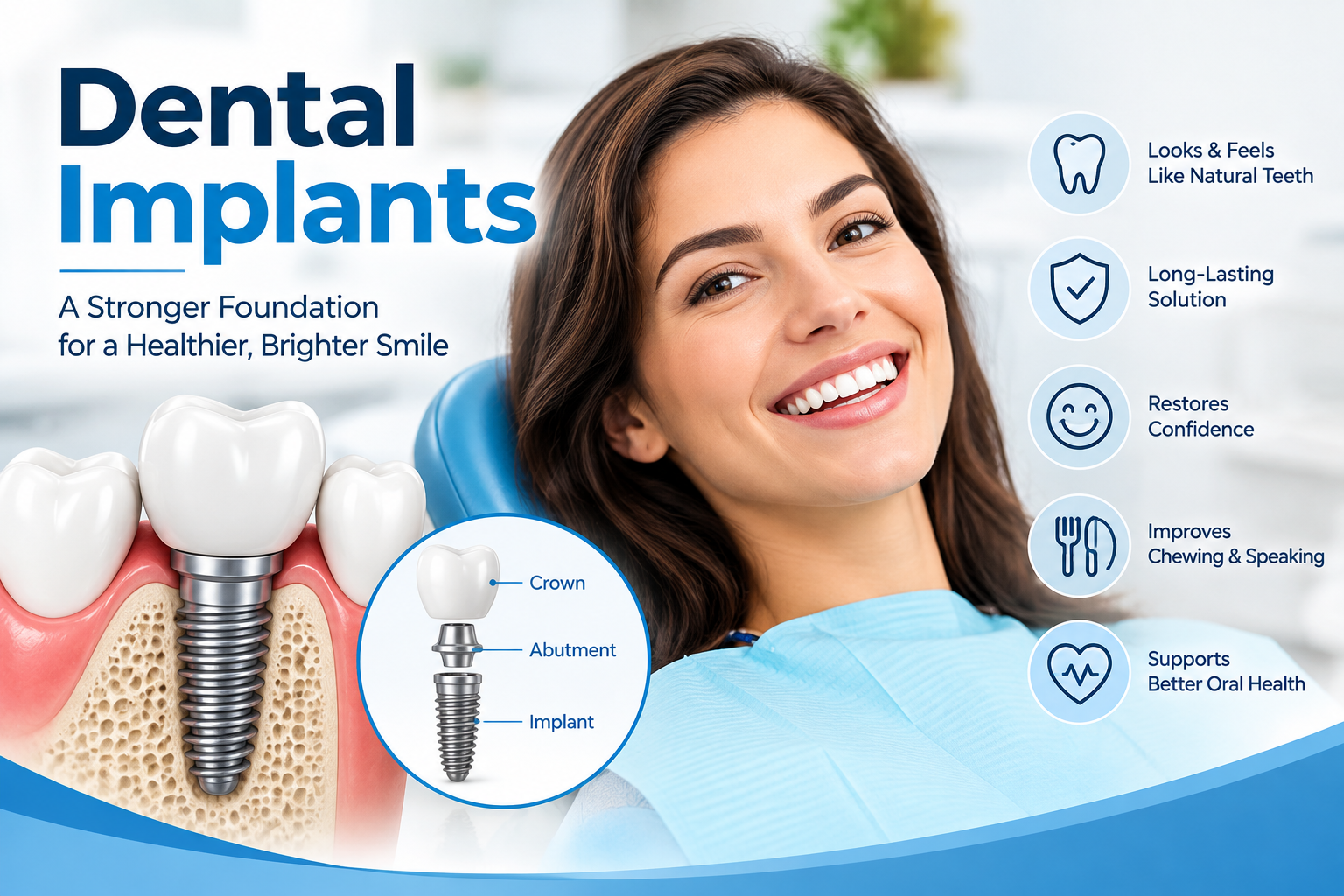
A dental implant is a replacement for the root of a missing tooth. It is placed into the jawbone and can support a replacement tooth, such as a crown.
A typical implant treatment may involve:
- An implant placed in the jawbone
- A connecting component called an abutment
- A dental crown that replaces the visible part of the tooth
The exact treatment plan depends on factors such as the number of missing teeth, oral health, bone condition, and the type of restoration required.
Why Are Dental Implants Used?
Dental implants may be considered when one or more teeth are missing. Replacing a missing tooth can help restore everyday oral function and improve the appearance of the smile.
Depending on the individual situation, dental implants may help with:
- Replacing a single missing tooth
- Replacing multiple missing teeth
- Supporting certain types of dental restorations
- Restoring chewing function
- Improving the appearance of a smile
- Providing support for a replacement tooth without relying on neighbouring teeth in the same way as some other options
Not everyone is automatically suitable for dental implants. A dentist needs to examine your teeth, gums, jawbone, and overall oral condition before recommending treatment.
How Does the Dental Implant Procedure Work?
The implant process is generally completed in stages. The exact sequence can vary from person to person.
1. Dental Consultation and Assessment
Your dentist first examines your mouth and discusses your dental history and concerns. Dental imaging may be recommended to help assess the teeth and supporting bone.
This stage helps the dentist determine whether an implant is appropriate and whether any other dental treatment is needed first.
2. Implant Placement
If an implant is suitable, the implant is placed into the jawbone. The area is carefully prepared as part of the dental procedure.
The implant then needs time to become securely supported by the surrounding bone.
3. Healing and Treatment Planning
Healing time varies depending on the individual and the treatment involved. Your dentist will guide you about the appropriate follow-up schedule.
4. Placement of the Replacement Tooth
Once the dentist determines that the implant is ready for the next stage, a replacement tooth such as a dental crown can be attached.
The final result is designed to function as part of your overall dental structure.
How Long Does Dental Implant Treatment Take?
Dental implant treatment is not always completed in a single appointment. The overall timeline depends on factors such as:
- Number of teeth being replaced
- Condition of the gums and surrounding teeth
- Jawbone condition
- Whether additional dental procedures are required
- Individual healing
During your consultation, the dentist can explain the expected stages and timeline based on your treatment plan.
What Should You Consider When Searching for the Best Dental Implants Near Me?
When comparing dental implant clinics near you, consider more than online rankings or advertisements.
Look for a clinic that provides:
- A proper dental consultation before treatment
- Clear explanation of available treatment options
- Appropriate dental examination and imaging when required
- A treatment plan suited to your dental needs
- Information about the treatment stages and expected follow-up
- Clear discussion of treatment costs and what they include
- Professional guidance on oral care after treatment
It can also be useful to ask questions during your consultation instead of choosing a clinic based only on a promotional offer.
What Can Affect the Cost of Dental Implants?
Dental implant costs can vary because every treatment plan is different. Factors that may influence the overall cost include:
- Number of implants required
- Type of replacement tooth
- Materials used
- Dental examination and imaging
- Condition of the gums and jawbone
- Additional procedures, if required
- Complexity of the treatment
- Follow-up requirements
A consultation is the appropriate way to understand the treatment options and associated costs for your particular case.
Dental Implant Aftercare
Good oral care remains important after implant treatment. Your dentist will provide specific instructions depending on the procedure you have undergone.
General care may include:
- Following your dentist’s cleaning instructions
- Maintaining regular oral hygiene
- Attending recommended follow-up appointments
- Avoiding habits that may interfere with healing
- Contacting your dentist if you notice unusual or persistent symptoms
If you experience significant discomfort, swelling, bleeding, or another concern after treatment, contact your dental professional for appropriate guidance.
Why Choose Diagnopein?
Diagnopein provides dental care services and focuses on helping patients understand their treatment needs. If you are considering dental implants, you can consult the dental team to discuss your concerns, undergo an appropriate assessment, and understand the treatment options available to you.
The team can also guide you about the steps involved in implant treatment and the follow-up care that may be required.
Frequently Asked Questions About Dental Implants
1. Are dental implants suitable for everyone?
No. Suitability depends on individual dental and oral health factors. A dentist needs to evaluate your teeth, gums, jawbone, and overall situation before recommending implants.
2. How many visits are needed for dental implants?
The number of visits varies depending on the treatment plan. Implant treatment can involve consultation, implant placement, healing, and placement of the final restoration.
3. How long do dental implants take?
The overall treatment period varies from patient to patient. Healing requirements, the number of implants, and any additional procedures can affect the timeline.
4. Are dental implants the only option for missing teeth?
No. Depending on your situation, a dentist may discuss different tooth-replacement options. Your dental condition, preferences, and treatment requirements can help determine which options are appropriate.
5. When should I consult a dentist about a missing tooth?
If you have a missing tooth or are experiencing difficulty chewing, discomfort, or other dental concerns, consider scheduling a dental consultation. A dentist can assess your oral health and explain suitable replacement options.