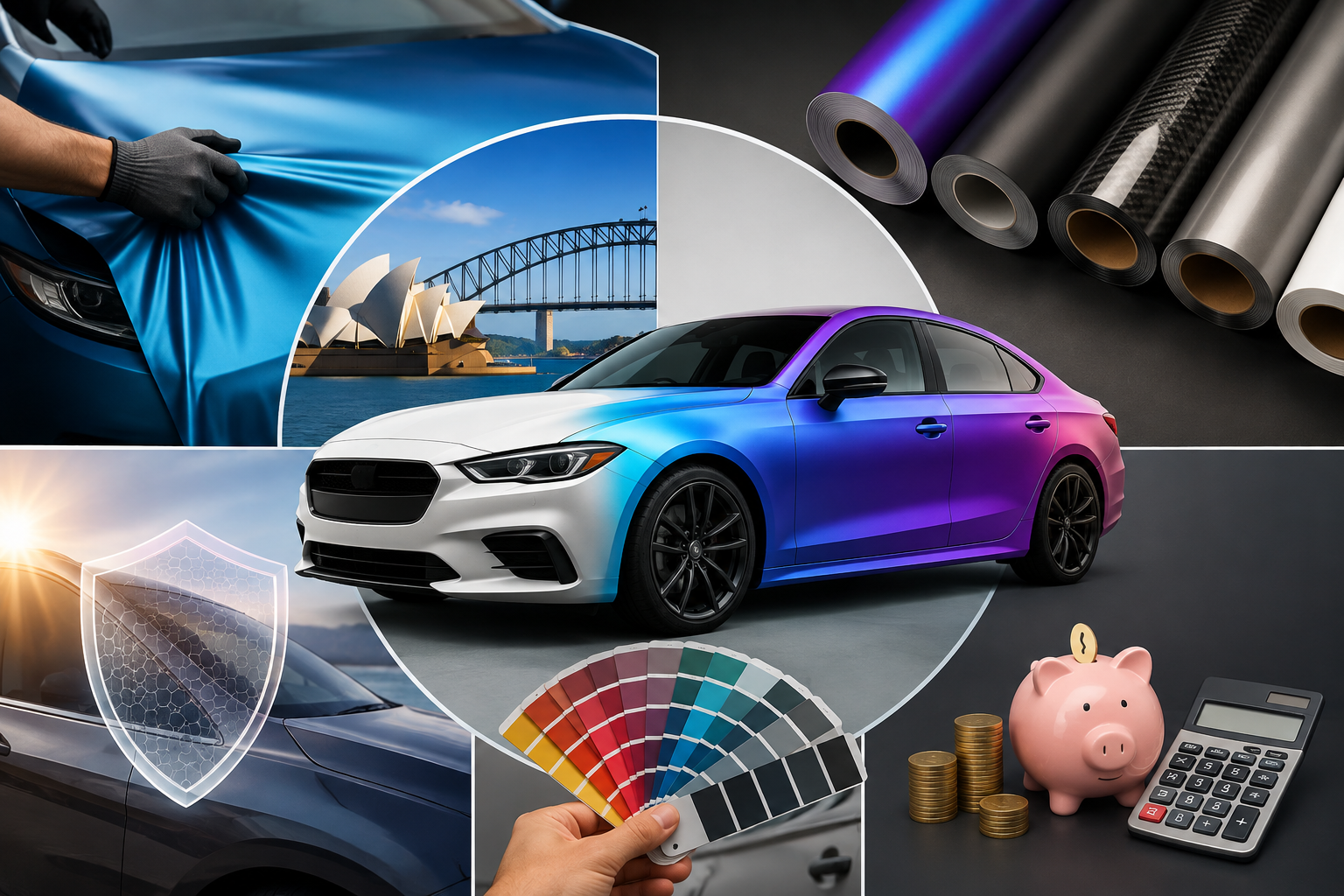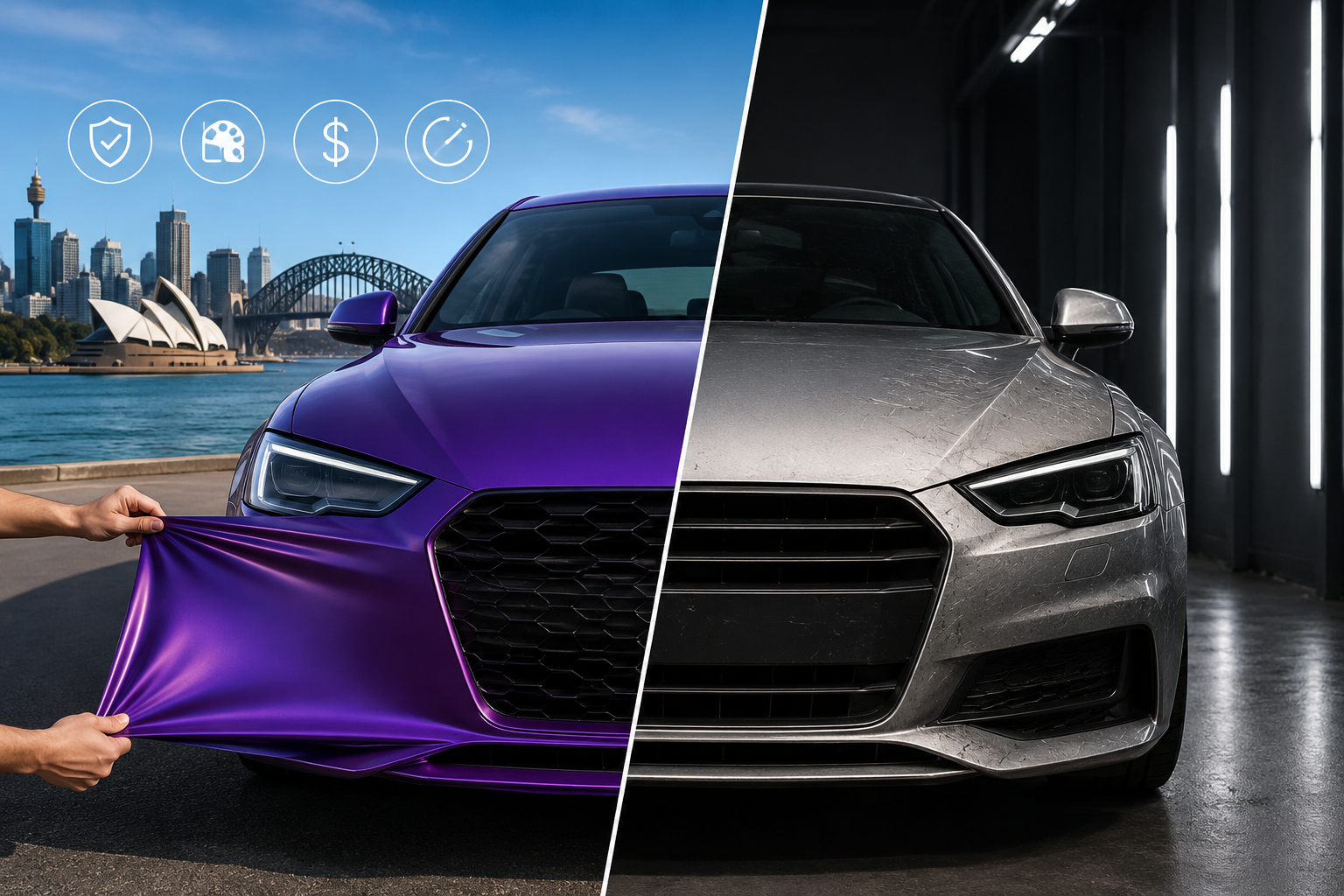
Walk into any panel shop in Sydney and ask for a quote on a full respray. Then call a professional wrap studio and ask for the same vehicle. In most cases, you will come away from that exercise with a very clear picture of where things stand in 2026 — and it is not where most people expect.
Car wrapping has moved from a niche modification into a mainstream choice, and the comparison with traditional repainting is no longer as straightforward as it once was. Based on real conversations with vehicle owners, workshop experience, and current market pricing across Sydney, this guide breaks down exactly what each option costs, how each performs over time, and which makes more sense for different situations in 2026.
What Is a Car Wrap?
The Basics of Car Wrapping
A car wrap is a thin cast vinyl film applied directly over a vehicle’s existing paintwork. It completely covers the original colour, transforming the vehicle’s appearance while leaving the factory paint untouched underneath. The vinyl adheres without chemically bonding to the paint, which means it can be removed cleanly at any point without damage to the surface beneath.
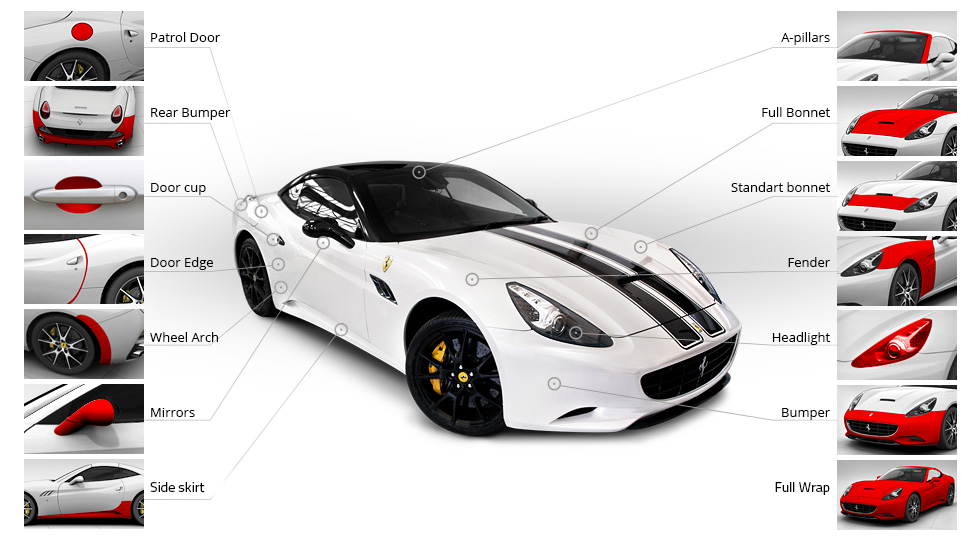
Wraps come in two primary formats. A full wrap covers every exterior panel of the vehicle — bonnet, roof, doors, guards, bumpers, and pillars — for a complete visual transformation. A partial wrap targets specific areas: a roof panel in a contrasting colour, a bonnet in matte black, racing stripes down the centre, or chrome delete on the trim elements. Partial wraps cost considerably less and can create significant visual impact with targeted application.
How Car Wrapping Actually Works
From experience watching professional installations, the process is considerably more involved than most people realise before they see it up close.
It starts with the surface. The vehicle needs to be thoroughly washed, decontaminated, and clay-barred to remove any embedded particles from the paint surface. Any stone chips, raised paint edges, or surface contamination left in place will telegraph through the vinyl — the film conforms precisely to whatever it sits over. This preparation stage is not glamorous, but it is where the quality of the final result is established.
The vinyl is then cut in panels, positioned carefully over each section of the vehicle, and worked into place using squeegees and heat guns. The heat activates the vinyl’s flexibility, allowing it to conform around complex curves, body lines, door jambs, and any feature that would otherwise cause creasing or lifting. The air-release channels built into premium cast vinyl make achieving a bubble-free finish significantly more achievable than it was in earlier generations of film.
Edge finishing is the detail that separates professional installations from amateur ones. Every edge of the vinyl needs to be wrapped cleanly underneath a panel edge, door jamb, or bumper lip so no raw vinyl edge is visible on any surface. Exposed raw edges lift over time. Properly finished edges hold for the life of the wrap.
Popular Wrap Finishes in 2026
The range of finishes available in vinyl has expanded dramatically and now far exceeds what traditional paint can offer at any equivalent price point.
Gloss wraps remain the most popular choice for colour changes, producing a deep, mirror-like finish that is visually indistinguishable from quality automotive paint when installed well. High gloss black, deep navy, and British racing green are among Sydney’s most frequently requested gloss wrap colours.
Matte wraps are the dominant finish in Sydney’s prestige and performance car community. Flat, non-reflective, and striking in a way that gloss rarely achieves, matte finishes have become a defining aesthetic of the local car scene. Matte black, matte charcoal, matte olive, and matte midnight blue are all consistently popular.
Satin finishes sit between gloss and matte — a subtle sheen that catches light gently without the full reflectivity of gloss. Enormously versatile and flattering across a wide range of colours and vehicle types. From experience, satin grey on a European SUV is one of the most consistently impressive outcomes in wrapping.
Metallic and chrome wraps use metallic flake or mirror-finish films to create effects that are genuinely impossible to achieve with standard automotive paint at comparable cost. Chrome in particular is a demanding installation that requires significant experience to execute well, but the result is extraordinary.
Colour shift wraps change appearance dramatically depending on viewing angle and lighting conditions — appearing one colour in direct sun and an entirely different shade in shade or at certain angles. These films have developed a serious following in Sydney’s enthusiast community.
What Is a Paint Job?
Traditional Automotive Repainting
A professional respray is the process of applying new automotive paint over a vehicle’s surfaces, either as a full repaint covering every panel or as targeted touch-up work on specific areas. Unlike wrapping, paint is a permanent change — once applied, it becomes part of the vehicle and cannot be reversed without further paintwork.
A full repaint replaces the factory colour with a new one through the full painting process, while touch-up work addresses specific damaged or faded panels to match the existing colour. The quality difference between a professional colour-matched touch-up and a full panel respray is usually visible to a trained eye, which is worth understanding before choosing touch-up as a budget alternative to full panel replacement.
How Automotive Painting Works
A proper respray is not simply a matter of spraying colour over existing paint. Done correctly, the process involves stripping trim pieces and components from the affected panels, sanding the existing surface back to create adhesion for the new paint, and in many cases taking the panels back to bare metal if the existing paint condition warrants it.
Primer is applied first, filling minor surface imperfections and creating a uniform base for the colour coat. The colour is then applied in multiple thin layers, building coverage gradually to avoid runs or uneven thickness. A clear coat is applied over the colour layers to provide gloss and protection, and the whole result is baked in a temperature-controlled booth to cure properly.
The sanding and preparation stage is the most labour-intensive part of the process and the area where budget shops typically cut corners. Skipping full preparation to save time produces paint that does not adhere properly, shows imperfections through the colour, and begins to peel or crack within a few years.
Popular Paint Finishes
Gloss remains the standard and most common automotive paint finish — factory vehicles use gloss as the default for good reason. It is the most durable paint option, easiest to maintain, and shows the best depth of colour.
Matte paint has grown in popularity among prestige manufacturers who offer it as a factory option on certain models. Aftermarket matte paint is considerably more expensive than matte vinyl and significantly harder to touch up if damaged – a matte paint scuff cannot simply be polished out as it would alter the finish.
Pearlescent and metallic finishes are standard options across most production vehicles. Factory metallic paint has considerable depth and quality built into the manufacturing process, which is difficult for aftermarket shops to fully replicate in colour-match situations.
Car Wraps Prices in 2026
Average Car Wrap Prices in Sydney
Based on current market rates and conversations with Sydney wrap studios, here is a realistic picture of what professional car wrapping costs in 2026. These figures reflect premium cast vinyl and experienced installation — not budget studios cutting corners on materials.
Small cars and hatchbacks — A full wrap on a small hatchback such as a Toyota Yaris or Volkswagen Polo typically runs between $2,500 and $3,500 for a standard gloss or satin finish. Specialty finishes add $500 to $1,500 on top of that range.
Sedans and mid-size vehicles — Mid-size sedans and small SUVs — think Toyota Camry, Mazda CX-5, or BMW 3 Series — sit in the $3,000 to $4,500 range for standard finishes. Larger SUVs like a Toyota RAV4 or Kia Sportage push toward $4,000 to $5,500.
Luxury and performance cars — Prestige vehicles, sports cars, and larger luxury SUVs command higher pricing for two reasons: more surface area and greater care required around complex body geometries. Expect $5,000 to $10,000 for vehicles in this category, with specialty finishes on exotics reaching $15,000 or more.
Commercial vehicles — A full commercial wrap on a transit van with branding and graphics typically ranges from $2,500 to $5,500 depending on the design complexity and whether the graphics include digitally printed elements.
Factors Affecting Car Wrap Prices
Vehicle size is the primary driver. More surface area means more vinyl and more installation time. A full-size van will always cost more than a small hatchback regardless of the finish.
Vinyl quality has a dramatic effect on both price and outcome. Premium cast vinyl from manufacturers like 3M, Avery Dennison, and KPMF costs significantly more than budget calendered alternatives. The difference in conformability, longevity, and finish quality is not marginal — it is the difference between a wrap that lasts seven years and one that begins lifting at eighteen months.
Finish type affects material cost. Standard gloss and satin finishes sit at the base of the pricing range. Matte, metallic, and colour-shift films cost more. Chrome vinyl is among the most expensive because of material cost and the additional installation time it demands.
Design complexity is a factor for commercial and custom printed wraps. A single-colour full wrap is straightforward. A commercial livery involving multiple printed graphic elements, colour zones, and precision-cut lettering requires more time and planning.
Installation labour reflects the skill and experience of the team. Experienced technicians charge more — and produce results that justify the premium. This is not an area to economise on.
Specialty Wrap Costs
Matte black wraps are among the most requested specialty finishes and typically add $300 to $700 to the base wrap price, depending on the film brand. From experience, customers who invest in premium matte black film are consistently more satisfied with the result three years later than those who chose the cheapest available option.
Chrome wraps are the most expensive finish category — material costs are high, and installation demands a level of skill that not every studio can reliably deliver. Full chrome wraps on standard vehicles can reach $8,000 to $12,000 or more. Partial chrome applications are more accessible.
Printed commercial wraps include design fees if artwork is being developed from scratch, plus digital printing costs on top of the installation. Full-side commercial liveries on vans typically sit in the $3,500 to $6,000 range when design is included.
Paint Job Costs in 2026
Average Repaint Costs in Australia
Paint pricing in Australia in 2026 covers a wide spectrum, and the correlation between price and quality is more direct in painting than in almost any other automotive service.
Budget paint jobs — Shops advertising full resprays in the $1,000 to $2,000 range exist across Sydney and regional markets. The results, based on what consistently shows up in before-and-after documentation from clients who have tried them, are typically poor: thin coverage that begins to peel within two years, visible orange peel texture, mismatched factory plastics that were masked rather than removed, and colour that does not penetrate into door jambs or hidden areas. For a vehicle whose appearance or resale value matters, budget resprays are a false economy.
Mid-range professional paint jobs — A proper professional respray from a reputable shop with correct preparation, quality paint products, and professional finishing sits in the $3,000 to $6,000 range for most standard passenger vehicles. This is the bracket where you start getting results that last and look consistently professional.
Premium showroom-quality repaints — Concours-level resprays, factory-correct colour matching for classic vehicles, or specialist finishes from high-end shops can reach $7,000 to $15,000 or more. These are not typical commercial resprays — they represent a different level of craftsmanship, time investment, and material quality entirely.
Factors Affecting Paint Costs
Paint quality covers a spectrum from basic single-stage products to two-stage systems with premium clear coat. The long-term durability, colour depth, and resistance to UV fading all correlate directly with paint quality.
Vehicle condition significantly affects preparation time. A vehicle with significant stone chips, panel damage, rust, or existing poor paintwork requires considerably more preparation before colour can be applied, adding labour cost to any quote.
Labour and preparation is the largest cost component in a quality respray. Proper preparation is time-intensive and cannot be shortcut without compromising the result. This is where budget shops save their money — and where quality shops earn theirs.
Custom colours and finishes — Specialist colours, custom mixing, pearlescent and candy-coat finishes, and factory colour matching on older vehicles all require additional expertise and material cost.
Car Wraps vs Paint Jobs: Key Comparisons
Initial Cost
Based on current Sydney market pricing, a professionally installed car wrap typically costs less than a comparable quality repaint. A mid-quality full wrap using premium cast vinyl sits in a price range that a quality professional respray cannot match at the same standard.
The comparison becomes more nuanced for specialty finishes. A professionally applied matte paint job costs significantly more than a matte vinyl wrap — matte paint is difficult to apply evenly, cannot be touched up without visible differences, and requires specialist clear coat products. Matte vinyl achieves the same visual result at a fraction of the cost and with the additional flexibility of reversibility.
Where paint begins to narrow the gap is at the very top end — showroom-quality single-colour paint on a clean vehicle, done by a truly skilled painter, can produce a depth of finish that premium gloss vinyl matches but does not quite exceed.
Appearance and Finish Options
In terms of variety, vinyl wraps win comprehensively. The range of finishes, colours, and effects available in vinyl — particularly in the specialty categories — far exceeds what traditional automotive paint can offer at any comparable price. Chrome, colour-shift, and matte metallic finishes in vinyl are accessible choices. In paint, they represent significant specialist investment.
Durability and Lifespan
A professionally installed premium cast vinyl wrap will typically last between five and seven years in Sydney conditions — in some cases beyond that with consistent care and covered parking. A quality professional respray has a similar or slightly longer theoretical lifespan. The practical difference is that paint degrades more visibly under UV exposure and is more susceptible to oxidation, while modern UV-stabilised vinyl films are specifically engineered to resist UV degradation.
Paint Protection Benefits
This is one of the most underappreciated advantages of wrapping, particularly among customers who are primarily focused on aesthetics. The vinyl film sits between the factory paint and everything the road environment delivers — stone chips, UV radiation, bird droppings, tree sap, road salt, and minor abrasion. When the wrap is eventually removed, the paint underneath is typically in significantly better condition than the exposed panels on the same vehicle.
Maintenance Requirements
Maintaining a vinyl wrap requires a specific approach but is not complicated once understood. Hand washing with a pH-neutral car shampoo and a soft microfibre mitt is the correct method. Automatic brush car washes should be avoided entirely — the brushes lift edges and abrade specialty finishes. Bird droppings and tree sap need prompt removal because they are mildly acidic and will etch into vinyl film if left. Matte finishes require particular attention to product selection — wax and polish will permanently damage the matte surface by filling the micro-texture that creates the flat finish. A matte-compatible ceramic coating applied at installation makes ongoing maintenance considerably easier and provides added UV protection.
Resale Value Impact
A quality vinyl wrap that preserves factory paint in excellent condition can be a genuine advantage at resale. The wrap is removed, the factory paint is revealed in better condition than it would otherwise be, and the vehicle presents well.
Flexibility and Reversibility
This is where wrapping has a categorical advantage. A vinyl wrap can be changed or removed at any point. A business rebranding, a personal style change, a resale preparation — all of these situations are addressed simply by removing the wrap, which a professional installer can do cleanly without affecting the factory paint.
Paint is permanent. Choosing a non-standard paint colour on a vehicle you plan to sell involves committing to that colour choice for the life of your ownership, with no option to revert.
Installation Time
A full professional vinyl wrap on a standard passenger vehicle is typically completed in one to three days. A quality professional respray — with proper preparation, colour application, and curing time — takes considerably longer, often one to two weeks from drop-off to collection when done correctly. For businesses or individuals who cannot afford extended time without their vehicle, this turnaround difference is practically meaningful.
Why Car Wrapping Is More Popular in 2026
Social Media and Customisation Culture
The influence of car culture content on Instagram, TikTok, and YouTube has fundamentally changed what the average driver considers possible and desirable for their vehicle. Colour-shift films, matte metallics, and chrome deletes that would have seemed extreme five years ago are now widely aspired to because they are visible and admired daily on social media. Vinyl wrapping enables these options at prices that are genuinely accessible.
Business Branding
For Sydney businesses, the practical commercial case for vehicle wrapping over paint is straightforward. A branded vehicle wrap generates thousands of daily local impressions, costs less than a comparable quality respray, and can be updated when branding changes without the vehicle being out of service for weeks.
Cost-Effective Styling
At every quality tier, wrapping delivers more visual variety per dollar than painting. The range of finishes achievable in vinyl — many of them impossible to replicate in paint at any price — makes wrapping the obvious choice for drivers who want something genuinely distinctive.
Temporary Flexibility
For drivers who change their mind about colour every few years, or who want a colour during ownership that does not affect resale, wrapping provides a solution that paint fundamentally cannot. This flexibility has broader appeal than the enthusiast market — it attracts sensible buyers who simply want their options open.
Common Mistakes to Avoid
Choosing cheap vinyl wraps — Budget calendered vinyl looks acceptable on day one and noticeably poor by year two. The edges lift, the colour fades unevenly, and the material shrinks away from panel edges. From experience watching this play out repeatedly, the cost saving on cheap vinyl is never worth the outcome.
Hiring inexperienced installers — Premium vinyl in inexperienced hands still produces poor results. Bubbles, tension distortion around curves, misaligned seams, and lifting edges are all symptoms of inadequate skill. Always check a studio’s portfolio across multiple recent completed jobs before committing.
Budget paint jobs with poor finish — A $1,500 respray is not a bargain. It is a deposit on future expense — the paint that begins peeling in eighteen months still needs to be properly addressed, and fixing bad paint is more expensive than doing it right initially.
How to Choose Between a Wrap and a Paint Job
When a Wrap Is the Better Choice
Choose wrapping when you want temporary customisation with the option to change or revert later. When you need business branding on a commercial vehicle. When you want to protect factory paint on a newer vehicle that you plan to sell in a few years. When you are chasing a specialty finish — matte, satin, colour-shift — that paint cannot match at a comparable price. When time is a consideration and you need the vehicle back quickly.
When Paint Might Be Better
Choose professional repainting when the existing paint is severely degraded, peeling, or damaged to the point where wrapping cannot sit cleanly over it. When you are undertaking a genuine restoration of a classic vehicle that demands factory-correct specification. When the colour change is truly permanent and you have no interest in reverting, and the vehicle will not be sold for many years. When significant panel repairs are being carried out simultaneously and the vehicle is already in the shop for bodywork.
Why Choose PROvinyl for Car Wrapping Sydney?
PROvinyl is one of Sydney’s most trusted vehicle wrap specialists, and the reasons are consistent across every project type.
Premium vinyl materials — PROvinyl uses premium cast vinyl exclusively. Every installation benefits from the conformability, UV resistance, and finish quality that industry-leading materials provide. Budget film is not used regardless of project scale, because the results matter.
Experienced installation team — The PROvinyl team has worked across hundreds of vehicles spanning every category — daily drivers, prestige cars, commercial fleets, and exotic vehicles. That breadth of experience is visible in the precision and consistency of every finished installation.
Custom design solutions — PROvinyl’s in-house design capability means commercial clients receive graphics developed specifically for vehicle application, not adapted from print assets. The difference between purpose-designed vehicle graphics and repurposed print artwork is immediately visible on a finished vehicle.
Commercial and personal vehicle wraps — Whether you need a single private vehicle transformed or a fleet of commercial vehicles branded consistently, PROvinyl has the capacity, the process, and the expertise to deliver.
Trusted Sydney car wrap specialists — PROvinyl’s reputation has been built on consistent quality, transparent pricing, and honest communication across every project. Sydney businesses and vehicle owners return because the experience matches the expectation.
Conclusion
The comparison between car wraps prices and paint jobs in 2026 is not particularly close for most vehicle owners and most situations. Wrapping costs less, offers more variety, installs faster, protects factory paint, and keeps your options open in a way that paint fundamentally cannot. The cases where paint is clearly the better choice are real but specific — classic restorations, severely damaged paintwork requiring bodywork, or truly permanent colour changes on vehicles that will not be sold for many years.
For Sydney vehicle owners choosing wrapping in 2026, PROvinyl’s combination of premium materials, experienced installation, and genuine commitment to quality makes the decision straightforward. Contact PROvinyl today for expert advice, a detailed quote, and the peace of mind that comes from working with Sydney’s most trusted car wrap specialists.