AI vs. Traditional Mobile App Development: Which One Should You Choose?
Mobile apps are everywhere, but the way they get built is changing fast. Businesses now face a real choice: go with AI app development or stick with traditional mobile app development?
What Is Traditional Mobile App Development?
Traditional mobile app development is the classic way to build apps. Developers write code line by line, using languages like Swift, Kotlin, or Java. Every screen, button, and feature is built manually.
This method has been around for years. It’s proven, and it’s stable—but it takes time.
Key traits of traditional development:
- Manual coding for every feature
- Longer development timelines
- Requires large development teams
- High control over app architecture
- Best for complex, custom apps
What Is AI-Powered App Development?
AI-powered app development leverages AI to accelerate the development process. AI tools can write code, design layouts, and even test apps, while developers still guide the overall direction. Think of AI as a smart assistant — it handles the repetitive tasks so humans can focus on strategy and creativity.
Today, there are many AI-driven app development companies that specialize in this approach, helping businesses launch apps faster without compromising on core functionality. If you’re looking to hire one, platforms like Goodfirms can help you compare top-rated firms based on reviews, portfolios, and expertise.
Key traits of AI development:
- Faster coding with AI code generation
- Automated testing and bug detection
- Lower development costs
- Smart personalization features
- Great for MVPs and quick launches
AI vs Traditional Mobile App Development: A Quick Comparison
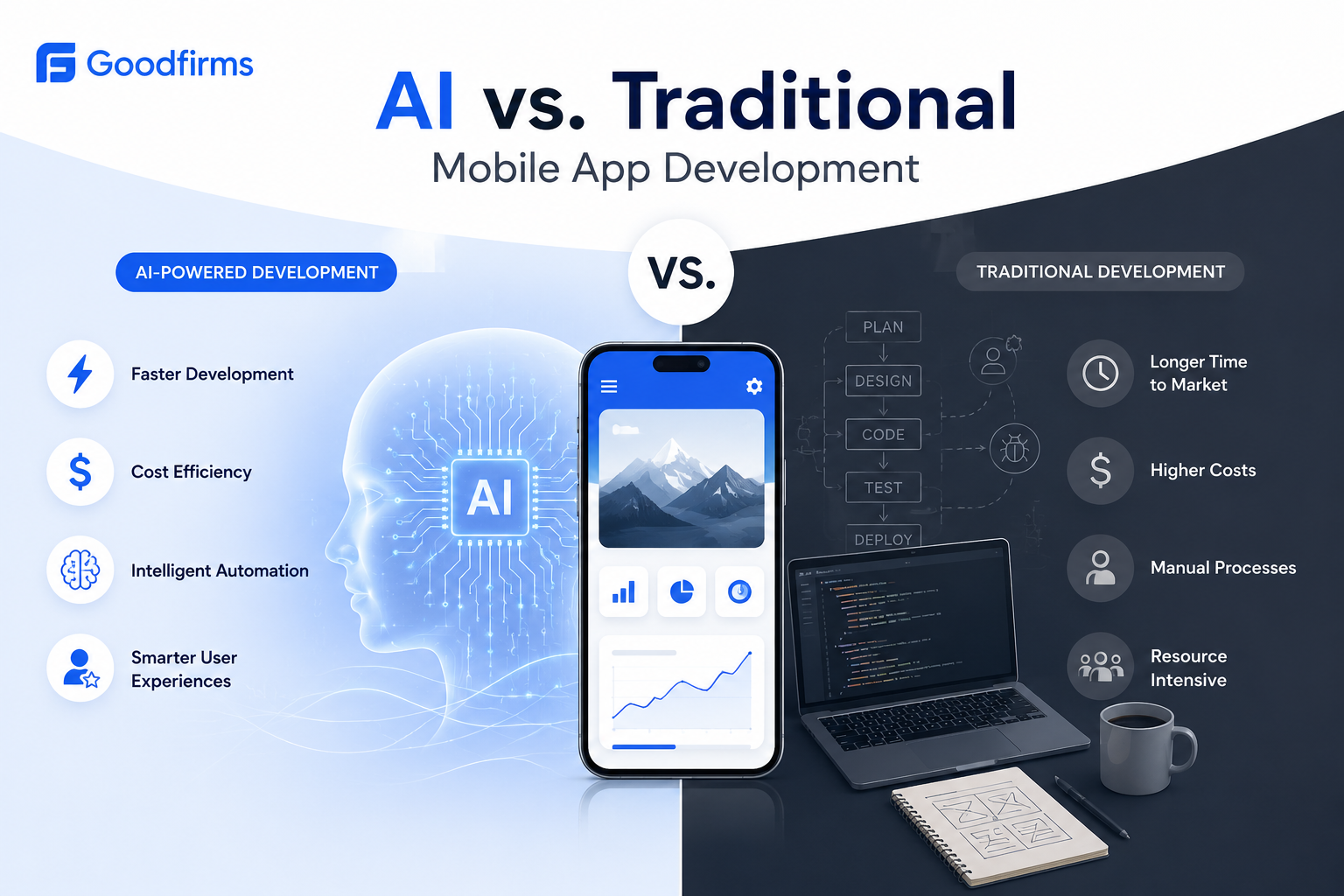
| Factor | Traditional Development | AI Development |
| Speed | Slower, months-long timelines | Much faster, code generated instantly |
| Cost | Higher, needs a full team | Lower, smaller teams needed |
| Customization | Deep, full control over every detail | Improving, but limited for complex logic |
| Best for | Complex, custom apps (banking, healthcare) | MVPs, quick launches, standard features |
| Team size | Larger (developers, designers, QA) | Smaller, AI handles repetitive work |
| Scalability | Strong long-term architecture | Good early on, needs human review later |
| UX approach | Hand-crafted, fully custom | Data-driven, personalized suggestions |
| Ideal for | Established businesses, high-stakes apps | Startups, fast market testing |
AI vs Traditional Mobile App Development: Speed Comparison
Speed is where AI truly shines. Traditional development can take months since multiple developers work on different app parts and testing happens manually—delays are common. AI development cuts this time down, generating code snippets instantly and catching bugs early, which means faster app releases.
Winner: AI development, when speed matters most.
Cost Differences You Should Know
Cost is a major factor for any business. Traditional app development needs a full team — developers, designers, and QA testers — and more people means higher costs. AI development reduces this need, since fewer people are required for the same output, as AI handles repetitive coding tasks automatically.
Smaller teams. Lower costs. Faster delivery.
Winner: AI development for budget-friendly projects.
Quality and Customization
Quality still matters more than speed. Traditional development allows deep customization, since developers control every detail — perfect for complex apps like banking or healthcare platforms. AI development is improving fast, but it can still struggle with highly complex logic. It works best with common features and templates.
Winner: Traditional development for complex, custom-built apps.
Scalability: Which Method Grows Better?
Every app owner wants to scale someday. Traditional apps are built with strong architecture, which makes scaling easier long-term, since developers plan for future growth from day one. AI apps can scale too, but they often need human review as complexity increases. AI is great for early growth stages.
Winner: Tie, depending on app goals.
User Experience (UX) Comparison
User experience decides app success. Traditional development gives full design freedom, letting designers craft every interaction by hand—creating polished, unique experiences. AI development uses smart UX suggestions, personalizing user journeys using data to create dynamic, adaptive experiences.
Both methods can deliver great UX. The difference lies in the approach.
Which One Should You Choose?
This depends on your business needs.
Choose traditional development if:
- Your app has complex logic
- You need full customization
- Long-term scalability is critical
- Budget isn’t your biggest concern
Choose AI development if:
- You need a fast MVP
- Budget is limited
- Your app has standard features
- You want quick market testing
If you go the AI route, it’s worth researching AI-driven app development companies carefully before committing. Checking verified client reviews and rankings on Goodfirms is a solid way to shortlist companies with a proven track record.
Can AI and Traditional Development Work Together?
Yes, absolutely. Many companies now use a hybrid approach — AI handles repetitive coding and testing, while human developers focus on complex logic and design. This combination saves time and keeps app quality high, and it’s becoming the smart choice for many startups.
Future of Mobile App Development
AI is not replacing developers — it’s making them more efficient. In the future, expect AI to handle even more tasks, like code reviews, security checks, and UI suggestions. But human creativity will still lead innovation, and traditional development skills will remain valuable, especially for complex, high-stakes apps.
Final Thoughts
Both AI and traditional mobile app development have strengths. AI offers speed and lower costs, while traditional development offers control and deep customization. The best choice depends on your app’s goals, budget, and timeline.
Many businesses now blend both methods, giving them speed without losing quality. And whichever path you choose, doing your homework—including a quick look at platforms like Goodfirms—can help you find the right partner for the job.
Choose wisely — your app’s success depends on it.
To read more articles visit: everydaymaster.com