There’s a real thrill to a good used-furniture find. A solid wood dresser for forty bucks. A barely-worn couch someone’s giving away because they’re moving. I’m all for it — but I’ve also pulled bed bugs out of enough thrifted headboards to tell you the thing nobody warns you about: used furniture is one of the most common ways these bugs move into a home in the first place.
The good news? A careful five-minute look before you load it into your car will catch almost anything. Here’s how I’d check.
Why used furniture is such a common way in
Bed bugs don’t fly, and they don’t jump. They hitchhike. A couch that sat in an infested apartment for a few months can easily have bugs and eggs tucked deep in the seams — and the person selling it may have no idea. That’s the part that trips people up. An infestation can be small enough that the previous owner never got badly bitten, but there are still plenty of bugs riding along, waiting for a new place to settle.
Anything soft is what I worry about most — a couch, a mattress, one of those padded headboards can all hide a lot. But don’t give wood a free pass. I’ve found them wedged into the joint of an old dresser more than once, down in a screw hole or that seam where two boards butt together. Rule of thumb: if a piece spent its life in somebody’s bedroom or living room, it’s earned a proper look before it rides home with you.
What to actually check, and where
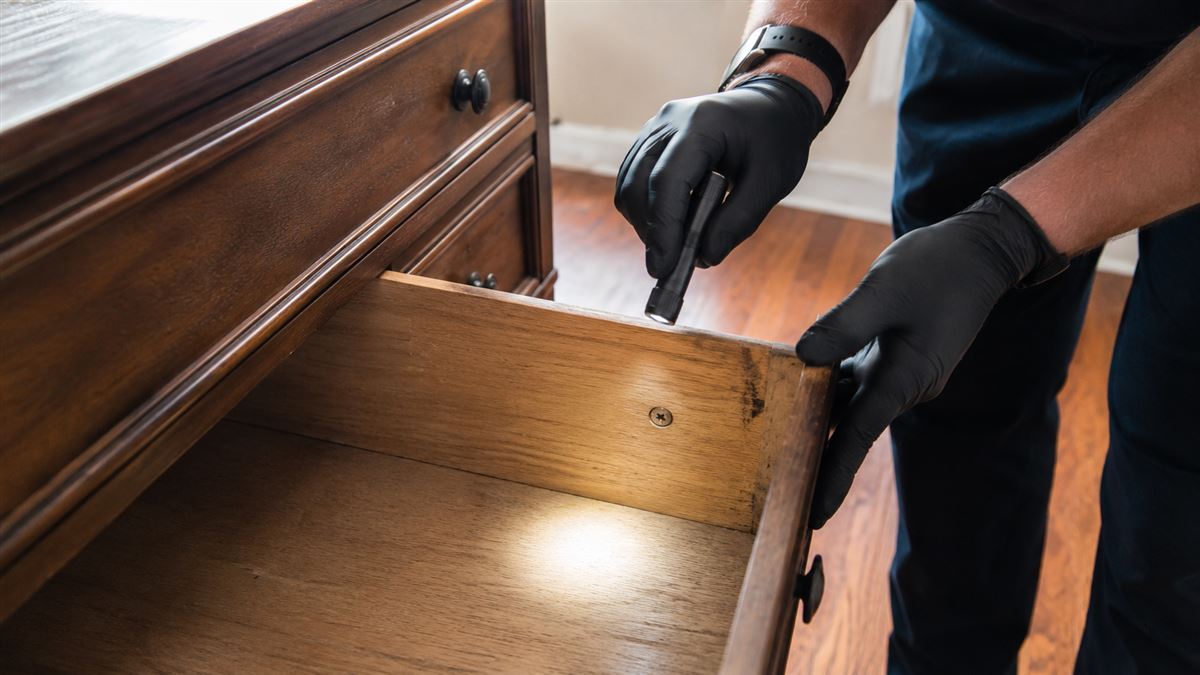
Bring a small flashlight and, if you’ve got one, an old bank card to run along the seams. Then go slow.
Start with the seams and piping on anything soft. That’s the number-one hiding spot — pull the fabric edge taut and shine the light right into the fold. On a mattress or box spring, check the piping all the way around, then peel back the corners and look underneath the tags and folds.
Pull the cushions out and dig into the crevices — where a couch arm meets the base is a classic one. With wood, flip the whole thing over. I go over the screw holes, the joints, under the drawers, along those little rails the drawers ride on. These things flatten right out and slide into gaps thinner than a credit card, so it’s nearly always the tight, dark, easy-to-skip spots that end up hiding them.
Don’t rush the underside. Nine times out of ten, the thing that gives an infestation away is hiding somewhere you’d have to physically flip the piece to see.
What the signs look like
There are basically four things that give it away, and you only need to spot one to put the piece back down.
Live bugs come first — reddish-brown, flat, roughly the size of an apple seed. The young ones throw people off, though. They’re smaller and a lot paler, and dead easy to miss if you’re not really looking for them.
Dark spots are the big tell. Little black or rust-colored dots on the fabric or in the seams — that’s bed bug fecal staining, and it looks a bit like someone touched a fine marker to the material. If you see a scattering of those in a seam, that’s your answer.
Shed skins are pale, empty husks — the shells bugs leave behind as they grow. And eggs are tiny, whitish, and sticky, usually clustered in a crevice. They’re small, so this is where the flashlight earns its keep.
If you already brought something home
Maybe you’re reading this a little late. It happens. If a piece is already inside, don’t panic and don’t drag it back through the house — that just spreads anything that’s on it.
Isolate it. Keep it away from your bed and your main seating for now, and give it the same slow inspection outdoors or in a garage if you can. Small and washable? A hot wash and a thorough vacuum of every seam will usually sort it out. But if we’re talking a mattress or some big upholstered piece and you’re turning up real signs on it — I’ll be straight with you, it’s rarely worth the gamble of keeping it around.
And please skip the internet shortcuts. People love to swear that a spray bottle of something from the kitchen will handle it — but if you’re wondering , the short version is that it doesn’t do what people hope, and leaning on it just buys the bugs time to spread.
When it’s already past a quick fix
If your check turns up more than a stray sign — live bugs in a couple of spots, staining in several seams — the furniture probably isn’t the only thing involved anymore, especially if it’s been inside for a few weeks.
Once you’re at that stage, the furniture isn’t really the issue anymore — the room is. And a whole room is usually where going it alone starts falling apart on people. Before you pour weeks into cans of spray, it’s worth knowing , because getting on it early tends to run a lot cheaper than waiting around until it’s really dug in.
The five-minute habit worth keeping
None of this means you have to give up thrifting. I still do it. It just means building a quick habit: never load a used piece into your car without flipping it over and checking the seams and joints first. Five minutes with a flashlight in a parking lot has saved plenty of people from months of misery.